18+ Heart & Kink
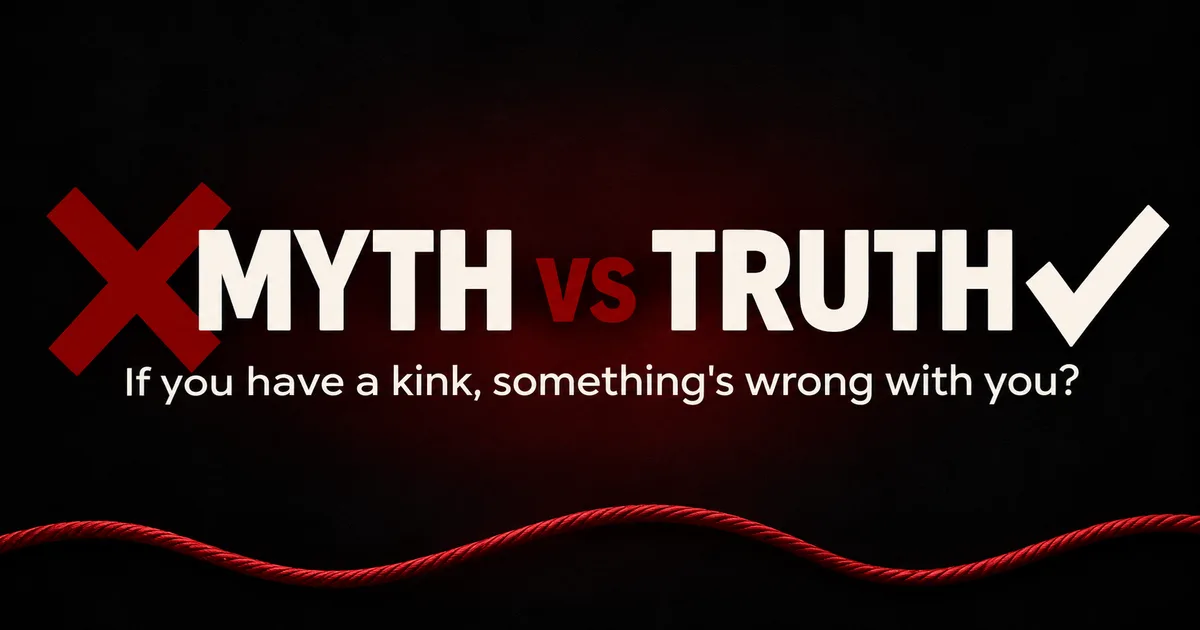
Myth vs Truth: "If You Have a Kink, Something's Wrong With You" 🖤
Scientists actually studied kinky people… and the results surprised everyone 👀 So if u ever worried something's wrong with u, this one's for u babe 💕
Hiii loves 💕
So a lot of u message me like "Katie… is something wrong with me? 😳" and then tell me ur kink so nervously, like u're scared I'll judge u 🥺 And honestly it melts my heart every time, because I would never! And guess what… science totally has ur back on this one 🖤
❌ The myth
"If I'm into this, something must be wrong with me."
✅ The truth (and it's actually so interesting)
👀 Almost half of people have tried it
A big study in Belgium asked over 1,000 normal everyday adults, and almost HALF said they'd done at least one BDSM thing, like being tied up or a little spanking 🙈 So u're definitely not alone, u're just being honest with urself 💕
🧠 Kinky people might actually be more relaxed
A study in the Netherlands compared people who do BDSM with people who don't, and the kinky group came out less anxious, more open, better with rejection, and happier in their relationships on average. Isn't that so cool?! 😍
🔗 Wanting to be dominated is super common
Researchers in Canada asked people about their fantasies, and being dominated was one of the most popular ones! So many guys secretly think they're the only one who wants a woman to take charge… nope, u're in a really big club hehe 😏💕
📚 Doctors changed their minds too
Kink used to be listed as a "disorder" in medical books. Not anymore! 🎉 Now it's not seen as an illness at all, as long as it's consensual and nobody gets hurt 💅
So why does it feel so scary sometimes?
Because nobody really talks about it 🥺 We mostly hear about kink as a joke, so the first time u notice u're into something, it's easy to panic and feel like the only one in the world. But now u know… u're actually really normal 💕
The only things that really matter
- Everyone gives a real, happy yes 💕
- Limits always get respected
- And please be gentle with urself, u deserve that 🥺
Wanna learn more in a cozy no-shame way?
Have a little peek at Kinkpedia, it's like a cute dictionary for all this stuff, and things feel way less scary once u understand them 🤞
And if u wanna chat with people who totally get it, come find ur people in the Telegram directory 🔥
Is there a myth u want me to bust next? Come tell me in the group, I'd love to hear from u 😘
Love u guys so much,
Katie 🖤💋
How to read the studies without turning them into a verdict
The reassuring headlines are real research, and they are easy to over-read. A survey can tell you that a want is common in a sample. It cannot tell you that your particular history is fine, that a partner owes you the act, or that you are healthy because a bar chart leaned your way. Averages are about groups. You are one person, with a body and a week that the paper never met.
The careful version of the numbers, with the sample and the paper beside each figure, lives on the kink statistics page. Use that when you want the count. Use this note when you want the feeling that sent you looking for a count. The two pages are doing different jobs. Quoting "almost half of people" in an argument is sloppier than the papers, because the papers ask different questions: a long list of acts across a lifetime is not the same question as "did you do this last year," and neither question is "is there something wrong with you."
What the manuals changed is narrower than a party slogan. An unusual sexual interest is not, by itself, the thing clinicians call a disorder. The line they draw has to do with distress, or with harm to someone who did not agree. That is a description of a book, not a clearance you can print out. This note is not a diagnosis and not a dare. If the want comes with panic, compulsion, or a plan to involve someone who cannot agree, talk to a qualified person where you live. A warm essay is the wrong tool for that.
Why it feels huge the first time you notice it
Most men meet kink first as a joke. A film uses it as a punchline. A group chat uses it as an insult. The private moment of recognition then has nowhere to sit except next to the joke. Of course it feels like a defect. The culture handed you a laugh track and no vocabulary. You are not strange for flinching. You are responding to the only tone you were given.
Secrecy makes the same want feel rarer than it is. If nobody in your actual life has said a plain sentence about desire, your sample size is one. A survey of a thousand adults will not feel true at 1am, because the thousand are not in the room. What helps is a smaller, real-er fact: other adults use these words on purpose, in public, without treating the speaker as broken. Kinkpedia is that vocabulary. How it is written tells you it is education, not a clinic and not a sermon.
Shame also lies about urgency. The first week a fantasy shows up, it can feel like it has to be acted on or it has to be destroyed. Neither is required. You can know a thing about yourself and not schedule it. You can decide it is a story you like in your head and do not want in the room. You can decide the opposite later, with a person, in words. Curiosity is allowed to stay curiosity. The rest of this shelf is for that pace.
If you want to tell someone
Do not open with the most extreme picture you have, and do not open with an apology for existing. A useful first sentence names the topic and asks whether they want the conversation. "I have been thinking about power, and I want to know if you want to hear it" is a door. "I am disgusting, but" is a trap you built for both of you. If they say not now, that is information, not a verdict on the kink.
The guide to telling a partner walks that talk without turning it into a script you have to perform. The yes, no, maybe list is how you get specific once both of you have agreed to look. Specificity is kinder than a cloud of hints. "I want to try being told what to do for an hour, and I do not want pain" is a plan. "I am into stuff" is a fog they cannot consent to.
You also get to keep it to yourself. Privacy is not the same as shame. Some men tell a partner, some tell a friend, some only ever read. The Telegram directory and KinkLife's own groups are there if you want other adults, and they are optional. A note on this shelf is not an application to either.
Questions people ask under this myth
Does a kink mean I was harmed?
No. A want is not a biography. Some people with difficult histories also have kinks, and so do people with ordinary ones. Treating the fantasy as proof of damage is another way of saying something is wrong with you. If you are distressed, or if you are remembering harm, that distress deserves a qualified person. The fantasy by itself is not the evidence.
Am I the only man who wants this?
You feel like it, because men are trained to joke instead of talk. Common wants still feel lonely when your own circle is silent. Read the statistics page before you trust a meme, and read what kink means before you trust a porn tag. Frequency is not permission, and rarity is not a disease.
Do I have to tell a partner immediately?
No. Tell them when you want a shared decision, not when panic wants a confession. You can sort your own yes and no first. A partner deserves honesty before you involve them in an act, and they do not require a full tour of your head on the first calm Tuesday.
When should I talk to a professional instead of a blog?
When you are unsafe, when the want is tangled up with compulsion or despair, or when you are planning to involve someone who cannot agree. Heart & Kink is Katie talking plainly. It is not a clinic. The links at the bottom of this note are for people who pick up.
18+ only. Heart & Kink is Katie talking plainly. It is not medical, legal or professional advice.
Join the main group Browse the directory